
Event management
From nothing to an event.
You prepare the program, coordinate the people, and bring the evening to a close. In front of a live audience, not in a training session.
- You lead for 90–120 minutes in front of an audience
- You match ten people with different tasks
- From a club evening to a national competition

Presenting duo Adam & Peter
What is it?
Two roles. One skill: leading an event.
Moderation makes you a better speaker. Organizing makes you a better leader. Together, it's event management.
Moderation
You lead the evening in front of an audience. You introduce the speakers, keep the time and the atmosphere.
You are growing as a speaker.You've been on stage the longest of all.
Organizing
You will prepare an event with a team. People, program, space, technology.
You grow as a leader.You lead people who are not subordinate to you.
Event management
You know how to build and execute an event. From the first email to the last applause.
They will entrust you with the event.In the club, at work and in private life.
Experience
Adam: “I hated organizing. Now I run events.”
From a soloist presenter to an organizer of his own events.

When I first joined Toastmasters, I hated organizing. It was my weakness. On the other hand, I enjoyed hosting from day one.
At the first meetings, I wanted to be a great presenter. Funny jokes, let everyone laugh and see what a good speaker I am. Gradually, I switched to a different style. Today, it's not me who should shine, but everyone who comes on stage.
Moderation is one of the best ways to become a better and more experienced speaker as quickly as possible.
The moderator spends the most time on stage. He introduces the speakers, keeps the pace, and sets the tone for the entire evening. It's quite a job, but it's worth it.
Then came the opportunities to organize: a Drive weekend and a public meeting at Eurovea for fifty people. I learned the most about the team. When you choose people you can rely on, organizing is easier and, most importantly, more fun.
I love the feeling when something comes out of nothing.
Today, I also organize my own humorous events.
— Adam Bauml
How it works
The evening you hold in your hands
The presenter is on stage the longest. He doesn't have to be the funniest. He has to create a space for others to shine.
Speaker No. 2 dropped outSubstitute confirmed. Evening as planned.
Without a dress rehearsal
No retakes at a live event.
Most people learn how to moderate and organize the hard way.
A spoiled event is visible to everyone.
No experience
What goes wrong the first time you do it
Because you don't have enough experience organizing and managing events.
The program will be extended.
The scheduled hour lasts two. The last speaker speaks to an empty hall.
Someone is not coming.
The key person will apologize in the morning. There is no plan B.
The presenter reads from the paper.
The parts of the evening do not follow each other. The audience loses attention.
Something goes wrong.
The microphone is whistling, the projector is not working. Everyone is looking at you.
You're pulling it yourself.
You don't have a team you trust. After the event, you're exhausted and don't want to do it anymore.
+32 minutes
- 20:41✕Speaker No. 3 did not arrive
- 20:47!The microphone is whistling.
- 20:52!Moderator searches notes
- 20:58✕The first people leave
Solution
General before it matters
In the club, you really moderate and organize. With a team, an audience, and feedback. A mistake doesn't cost you a client or your reputation.
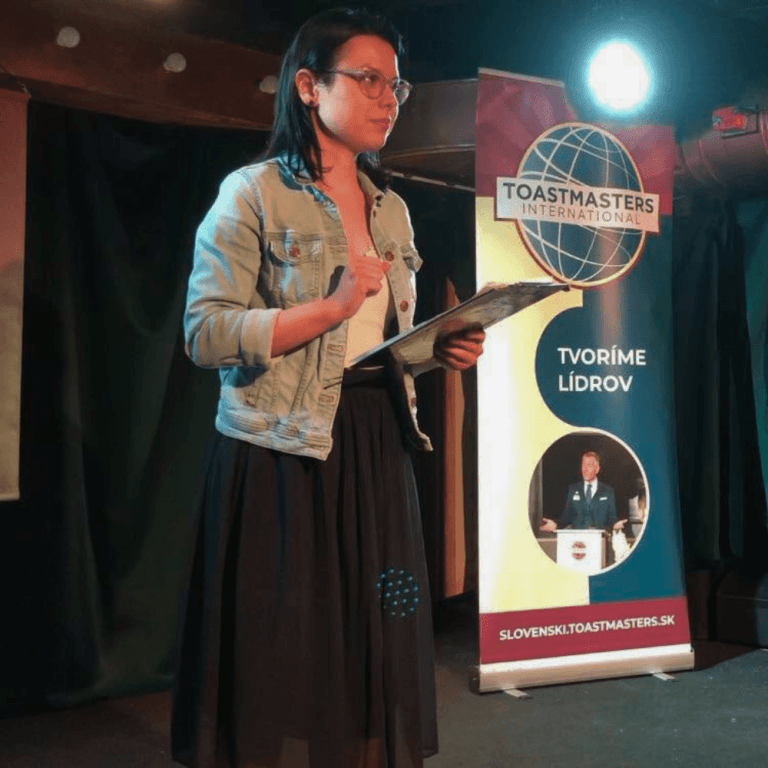
Club night
Here you will learn the basics: agenda, people, time and atmosphere. Every meeting has a moderator, and once in a while you will be the moderator.

Speech competitions
Club and national competitions. Referees, timekeepers, audience.

Public meetings
Under the open sky by the Danube, for dozens of guests.
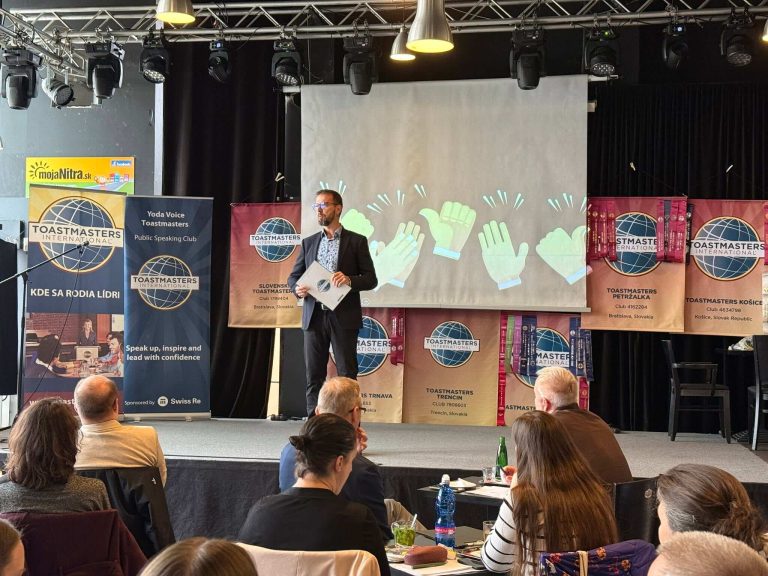
Anniversaries and balls
Space, catering, program, budget. Three months of preparation.

Weekend Drive
A weekend for members together. Program, people, logistics.
Result
You are the one who gets served microphone.
Behind a good event is someone who prepares it and someone who runs it. It could be you.
Consultation
It will end on time. And with a decision.
Conference
You're connecting speakers. You're not reading from paper.
Wedding
Your friend hands you the microphone. You say yes.
Team
People follow you even if you're not their boss.
Experience
Daniel: "I was afraid. That's why I went for it."„
From a person with no organizational talent to the main organizer of the competition.
PHOTO: Daniel Grančák
vertical 4:5 · 1080×1350
The National Speech Contest was my biggest event so far, and I played the role of the main organizer.
I don't have a talent for organizing. I was afraid that with so many things going on, I would miss something important. And that's exactly why I went for it. When I'm afraid of something, it takes away my freedom, and I don't want that.
The first step decided everything: surround yourself with people you can rely on.
Everyone on the team had their part. The head referee carried the entire refereeing agenda. I didn't have to keep everything in my head. It was enough to know who was in charge of what, ask if they needed help, and when something got stuck, pull the right thread.
And I know that people here will support me when I need it. Without the team, the competition would not be nearly as high as it is.
Today I lead the club area as Area Director. I feel that I have increased my capacity and that everything will go more smoothly.
It gave me the courage to continue organizing.
— Daniel Grančák, Area Director
Experience
What did it give them?
„"I destroyed my trauma and threw it behind my head."“
I carried trauma from elementary school. I couldn't moderate a panel discussion.
When I first moderated a Toastmasters meeting, I was extremely stressed. And at the same time, I was incredibly proud of myself.
Later, I organized meetings and gave members roles they grew in. It taught me how to prioritize, organize, delegate, and take responsibility.

Francis
Toastmasters Košice
„"I'm not afraid to take action."“
I organized a ball for 50 people for the 100th anniversary of Toastmasters. From A to Z: space, catering, budget, program, marketing, logistics, suppliers.
The preparation took three months. Thanks to communication and compromises, the event was a huge success.
Nowadays, I always look at the other side in conflicts.

Catherine
organizer of the 100th anniversary ball
Come and see the meeting.
You'll see the presenter in action. You don't have to say anything, just show up.
Free entry · No registration required
FAQ
Frequently asked questions
How will moderating make me a better speaker?
The speaker gives one speech at the meeting for 5 to 7 minutes. The moderator stands in front of the people the whole evening.
In 90 to 120 minutes, you'll introduce each speaker, connect each section, and respond to everything that happens in the room. Most of it you'll say without preparation.
At the end, a summary evaluator will tell you how you performed that evening. You won't get that kind of performance feedback anywhere else.
How will organizing make me a better leader?
No one in the club is bossing anyone else. Everyone is a volunteer.
When you organize a meeting or a competition, you have to convince people, not command them. You divide tasks, keep deadlines, and if someone drops out, you find a replacement.
This is exactly what you do at work when you lead a team or project.
Do I need to have experience in moderating or organizing?
No. First, you try out smaller roles at the meeting, such as timekeeper. You move on to hosting once you know the flow of the evening.
A new member will be assigned a mentor, a more experienced member, who will help them with their first moderation.
What if I make a mistake while moderating in front of an audience?
It can happen. You get a name wrong, forget to mention a role, or run out of time. It happens even to experienced presenters.
The club is filled with people who have been through it too. After the meeting, you get feedback and you do better next time. You don't get a second chance at a company conference.
How will I use it at work?
- The meeting ends on time and with a decision.
- You can prepare and moderate a conference or team building.
- You have a specific story to tell in an interview, not a phrase.